
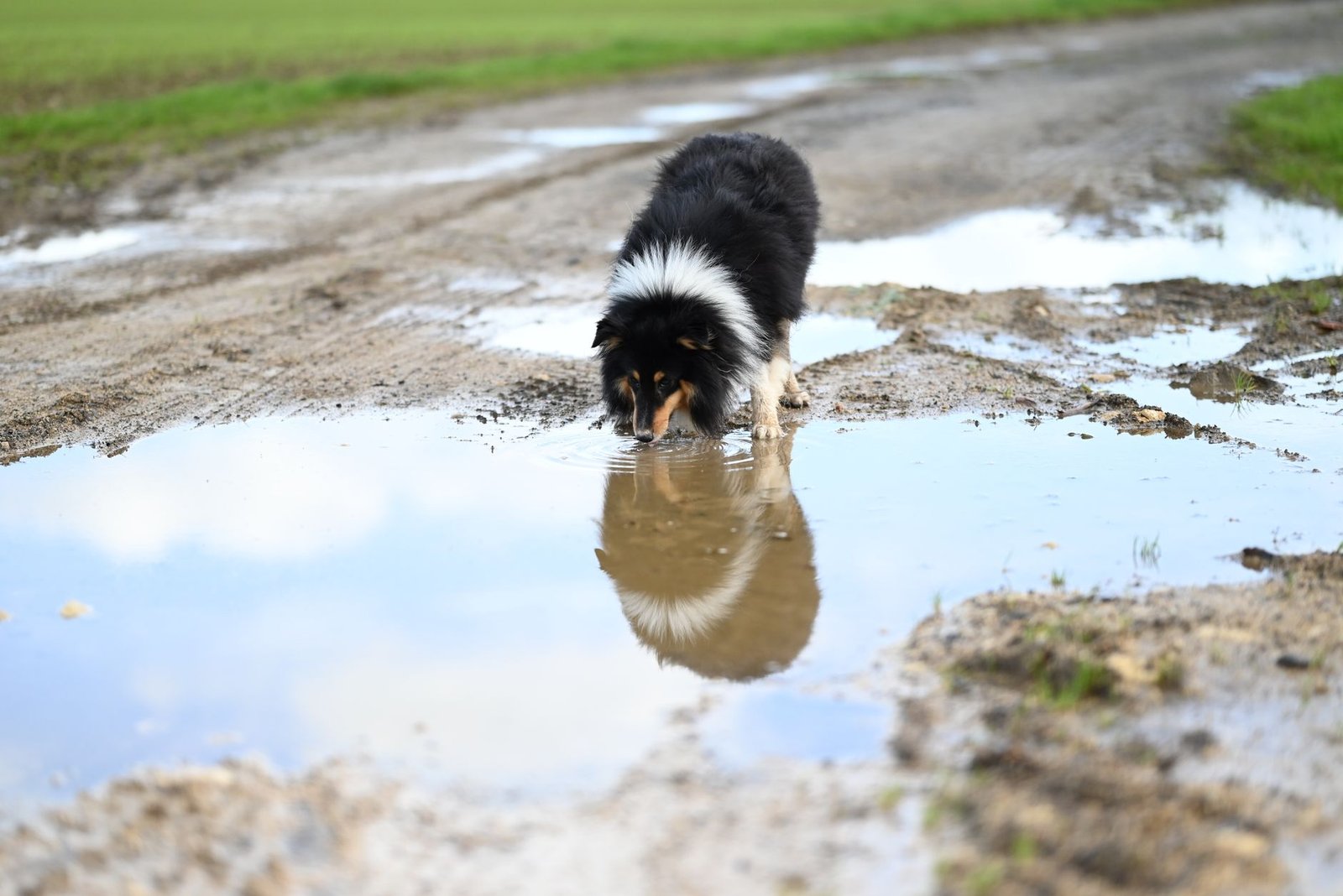
Livermore nights turn cold in November, radiators get topped off, and a bright puddle appears on a garage floor or a driveway. Ethylene glycol is swallowed readily, and the amount required is far smaller than anyone expects. Of everything in a garage, this is the one where the first few hours decide the outcome.
How little it takes
This is the part that changes how carefully people clean up. For a cat, a single teaspoon of undiluted coolant can be enough to be fatal. For a small dog, a couple of tablespoons. A medium-sized dog needs more than that, but not a great deal more, and a smaller amount still damages the kidneys. A cat does not need to drink from a puddle either — walking through it and then grooming their paws is a documented route, which is why an outdoor cat in a neighborhood where somebody has tipped coolant onto the ground is at risk without ever going near a garage.
Palatability is part of the problem. Coolant sold in California has carried a bitter additive by law since 2004, but used coolant, older stock and the non-coolant products below are not reliably covered — and a cat who walks through it will swallow it while grooming whether it tastes of anything or not.
The three stages, and the one that fools everybody
The timeline matters more here than in almost any other poisoning, because it runs from the moment they drink rather than from when they look unwell.
First, within half an hour to twelve hours, they look drunk. Wobbly, uncoordinated, maybe vomiting, drinking and urinating noticeably more. Owners frequently describe it as the animal seeming confused or stumbling.
Then, roughly twelve to twenty-four hours in, they appear to improve. The wobbliness passes and the animal seems better. Nothing has improved. The damaging chemistry has moved on to the kidneys, and this is the stage where owners decide against going in. It is the most dangerous stretch of the whole sequence.
Then the kidneys fail. Vomiting returns, the animal goes flat and off food, and urine output drops or stops. The timing here differs by species in a way that is worth knowing: cats reach this stage considerably faster than dogs — often within twelve to twenty-four hours of drinking, where a dog may take a day and a half to three days. A cat has less time, not more.
The reason all of this matters: there is something we can give that blocks the chemistry before it damages the kidneys, and it only works early. For cats the useful window is measured in the first few hours. For dogs it is somewhat longer but still counted in hours, not days. Once the kidneys are failing, the options narrow sharply.
So the rule is blunt. If you have any reason to think your pet has had access to coolant, come in now. Do not wait for signs, and absolutely do not wait out the stage where they seem better.
Where it is in your garage
Coolant is the obvious one, but the same chemical shows up in several places people do not check:
- Engine coolant and antifreeze, including whatever is in the bottom of the drain pan.
- Windshield de-icer. Washer fluid is usually a different chemical, and also not safe to leave out.
- Some brake and transmission fluids.
- Motor oils, solvents, paints and wood stains, which carry it at lower concentrations.
- Snow globes, which sounds absurd until one gets knocked off a shelf and a cat investigates the liquid.
Worth knowing: coolants based on propylene glycol instead are substantially less dangerous, and some are labeled accordingly. Switching is a reasonable thing to do if you keep a jug in a garage a cat can reach. The pink antifreeze sold for RV and plumbing lines is the propylene glycol kind, which is the safer one. Less dangerous is not the same as harmless though, and in cats propylene glycol has its own effect on red blood cells, so store it the same way.
What to do in the garage this week
- Clean up every drop immediately, and wash the floor rather than wiping it. A thin film is still sweet.
- Store containers closed and up high, not on the floor beside the car.
- Check under your own car for drips, and look again after a cold snap, which is when hoses and seals tend to let go.
- Keep pets out of the garage as a standing rule, and check before you close the door.
- Bang the hood and sound the horn before starting the car on cold mornings. That is a different hazard, but it is the same five seconds.
- Mention it to neighbors if you see a puddle on shared pavement. The cat it affects is often not the one who owns the driveway.
If something has already happened, bring the container if you can. Knowing which product and roughly how much changes what we do. Our urgent care takes these cases immediately rather than into the queue, in-house blood work and urinalysis shows us how far the chemistry has moved and whether the kidneys are already involved, and our medical services team manages the kidney follow-up in the weeks afterwards.
Our hours
We are open Monday through Saturday from 8:00 am to 9:00 pm and Sunday from 9:00 am to 8:00 pm, seven days a week.
Those hours cover most of a cold evening, which is when this tends to happen. If it happens after we close, do not wait for morning — the delay is the thing that does the damage. Our own after-hours referrals are VEG San Ramon, Ironhorse in Dublin and SAGE in Dublin, so go to whichever is closest and tell them it is a possible coolant exposure when you call on the way.
Common questions
My dog licked a small spot and seems completely fine. Do I really come in?
Yes, and quickly. “Fine” is expected in the first hour and tells you almost nothing. This is the one exposure where arriving early and being told it was nothing is a far better outcome than the alternative.
How would I even know? I did not see anything.
Often you would not, which is why the wobbly, drunk-looking stage matters. An unexplained stumbling animal in November, especially one with garage access, is worth a phone call with coolant specifically mentioned.
Is the green color reliable?
No. Coolant is dyed various colors, including orange, pink and blue, and dye says nothing about which chemical is in it. Judge by the product, not the color.
Should I make my pet vomit?
Not on your own. Call us first. Whether that helps depends entirely on how long ago it happened, and the time spent trying is time not spent driving.
Is there any lasting damage if we catch it in time?
Caught early enough, many animals recover fully. Caught at the kidney stage, the outlook is much poorer and some animals are left with permanent kidney damage. The difference between those two sentences is hours.
Speak to the team at PetCura Animal Hospital
Go and look at your garage floor tonight, and move the coolant jug off the ground. If you think your pet has had any contact with it, call us now rather than watching to see what happens.
Published by the team at PetCura Animal Hospital.
This article is educational in nature and is not a replacement for hands-on assessment of your own pet by a veterinarian.
PetCura Animal Hospital
1817 Holmes St., Livermore, CA 94550
Phone: (925) 292-5153
Hours: Monday to Saturday 8:00 am to 9:00 pm; Sunday 9:00 am to 8:00 pm